
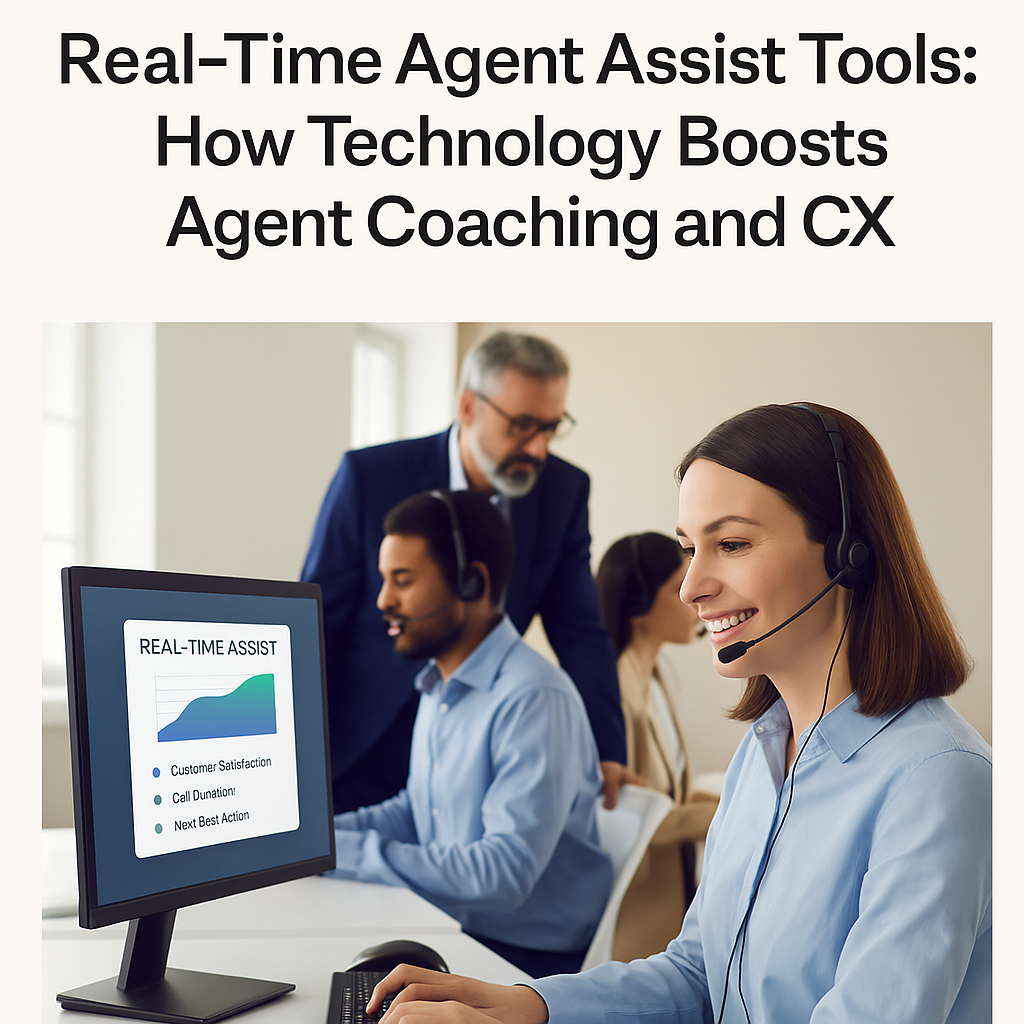
Customer service occurs in real time in today’s environment. People want to be understood and want answers quickly. Real-time agent assist tools are a subtle but significant change in the way contact centers assist their workers and provide customer service.
In the background, these tools serve as a helpful guide, assisting agents in making better judgments, maintaining composure during live conversations, and establishing a more human connection with clients. The outcome? improved interactions, more contented agents, and a genuinely remarkable customer experience (CX).
From Feedback After the Call to On-the-Spot Assistance
Coaching in call centers used to primarily take place after calls had concluded. Supervisors would listen to recordings, take notes, and meet with agents to discuss what went well and what didn’t. By then, the moment to make a real difference was gone.
Now, things are changing. With real-time agent assist tools, feedback happens live. If an agent starts to sound unsure or a customer’s tone shifts, gentle on-screen cues appear to guide the agent — maybe suggesting a way to clarify, empathize, or stay compliant with policies.
This shift means coaching no longer feels like correction; it feels like support. It turns stressful calls into learning moments — instantly.
Making Work Easier for Call Center Doctors and Specialists
In healthcare-focused contact centers, call center doctors and medical advisors handle sensitive, emotional calls every day. The right words and tone can make all the difference when a patient is anxious or confused.
These professionals benefit greatly from these real-time support systems, which help them maintain composure and remain cool. They provide prompts for quick reference to confirm medical facts. notifications to ensure clear and compliant communication, suggestions for speed and tone that can reassure patients.
This kind of help enhances rather than lessens the personal touch. Doctors and agents can focus more on empathy and understanding when they know they are part of a system.
The Benefits of Analytics for Real-Time Coaching
Every discussion behind the scenes contributes to insightful information. Real-time coaching analytics collect call patterns, such as trends in customer satisfaction, typical response times, or reoccurring problems, and transform them into information that managers and trainers may use.
Supervisors can observe exactly what’s going on and coach appropriately rather than speculating about who needs extra assistance or which script isn’t working. Maintaining scores is less important than assisting each agent in developing in a way that feels equitable, empowered, and distinct.
The phrase “next best action” refers to human cognition, despite its technical connotations. During a call, these technologies are able to sense the conversation and discreetly suggest to the agent what to do next, whether it be offering a solution, asking a clarifying question, or simply showing empathy.
For instance, the algorithm may recommend that the AI agent take blame and apologize if the customer seems upset. It could be recommended to simplify the explanation if the caller appears perplexed. By expertly supporting agents in managing challenging situations, these immediate reminders help to keep customers relaxed and well-cared for.
Modifying the Consumer Experience
The main objective of every great call center is to make customers feel valued. Real-time agent assistance solutions help teams achieve that goal by empowering them to respond more quickly, accurately, and sympathetically.
They make the following contributions:
- Quicker resolutions: Agents receive the assistance they require at the appropriate time.
- Experiences that are consistent: Each client gets the same outstanding degree of attention.
- Empathic communication: Agents are encouraged to listen carefully and answer politely.
- Decreased errors: Instantaneous verification ensures reliable and correct data.
Consumers feel heard in addition to receiving answers. This emotional bond fosters loyalty that cannot be produced by a screenplay alone.
A Human Heart in Technology
The mix of real-time agent assist tools is what makes them so appealing. Instead of replacing human instincts, they strengthen them. The tools only clear the way, removing barriers and providing useful reminders when necessary; agents still provide warmth, tolerance, and understanding.
Instead of a machine delivering commands, it’s like having a mentor whispering support during a difficult time. That is what sustains genuine customer service even in the high-tech world of today.
Concluding Remarks
Real-time guidance is a new method of functioning, not just a new feature. Agents benefit from feeling supported rather than watched over. Customers feel appreciated rather than processed thanks to it. Additionally, it’s a step toward creating genuinely meaningful experiences for companies like CallCenterDoctorsInsights.org that genuinely care about their clients and their employees.
Tools for real-time agent assistance combine timing, expertise, and compassion. One human conversation at a time, they transform every call into a chance to connect, solve problems, and make a lasting impact when utilized carefully.It helps agents feel supported, not supervised. It helps customers feel valued, not processed. And for organizations that care deeply about both their people and their clients — like CallCenterDoctorsInsights.org — it’s a step toward building truly meaningful experiences.
Real-time agent assist tools bring together skill, compassion, and timing. When used with care, they turn every call into an opportunity to connect, solve, and leave a lasting impression — one human conversation at a time.